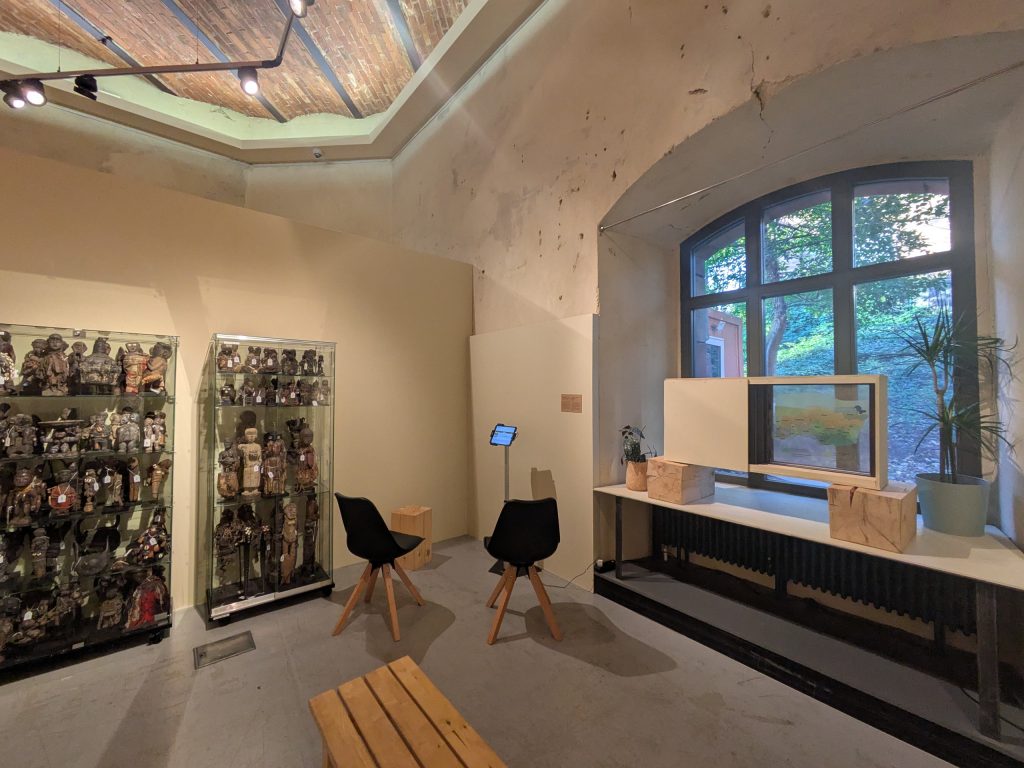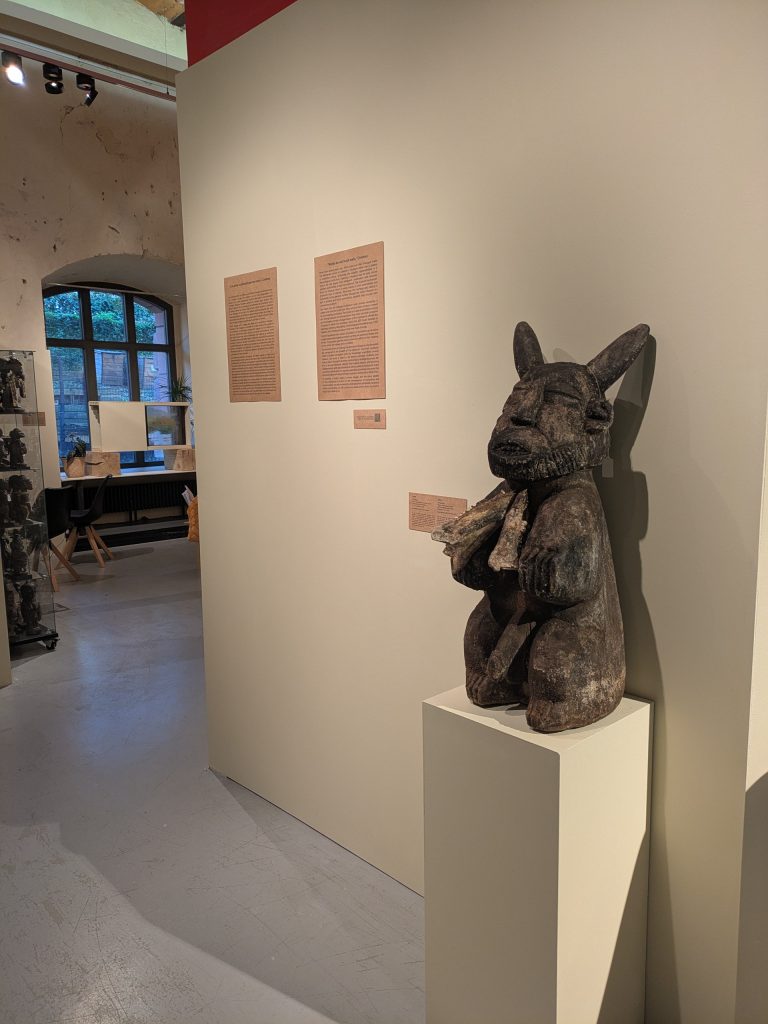
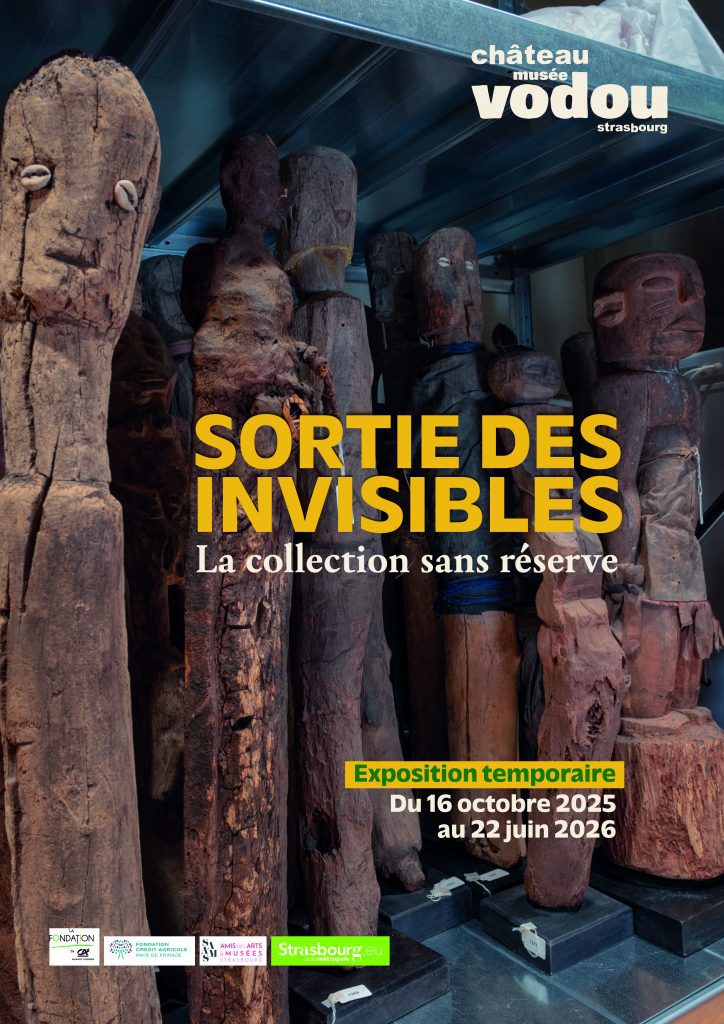
Temporary exhibition from 16 October 2025 to 30 November 2026
(Exceptional extension due to its success!)
In a museum, from an object on display to an object preserved, there is only a display case.
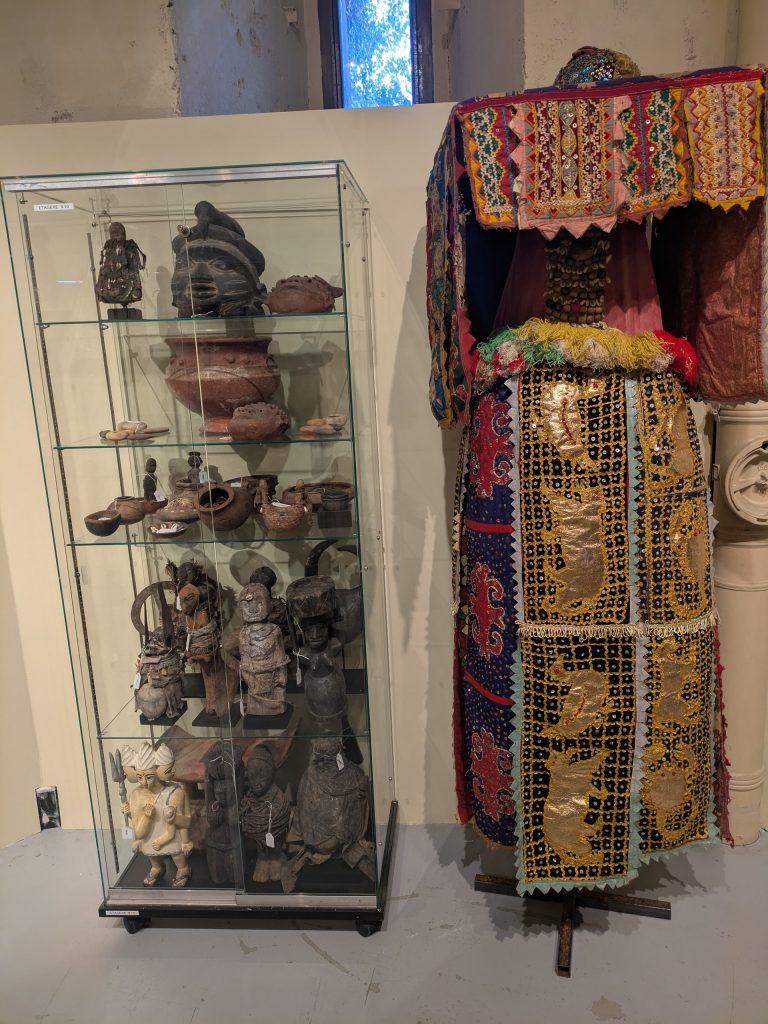
Following a major reorganisation of its reserves, the Voodoo Castle is pulling back the curtain on its behind-the-scenes operations.
Museum reserves, often inaccessible and perceived as storage places, are in reality the beating heart of museums. They allow for conservation, study, and transmission.
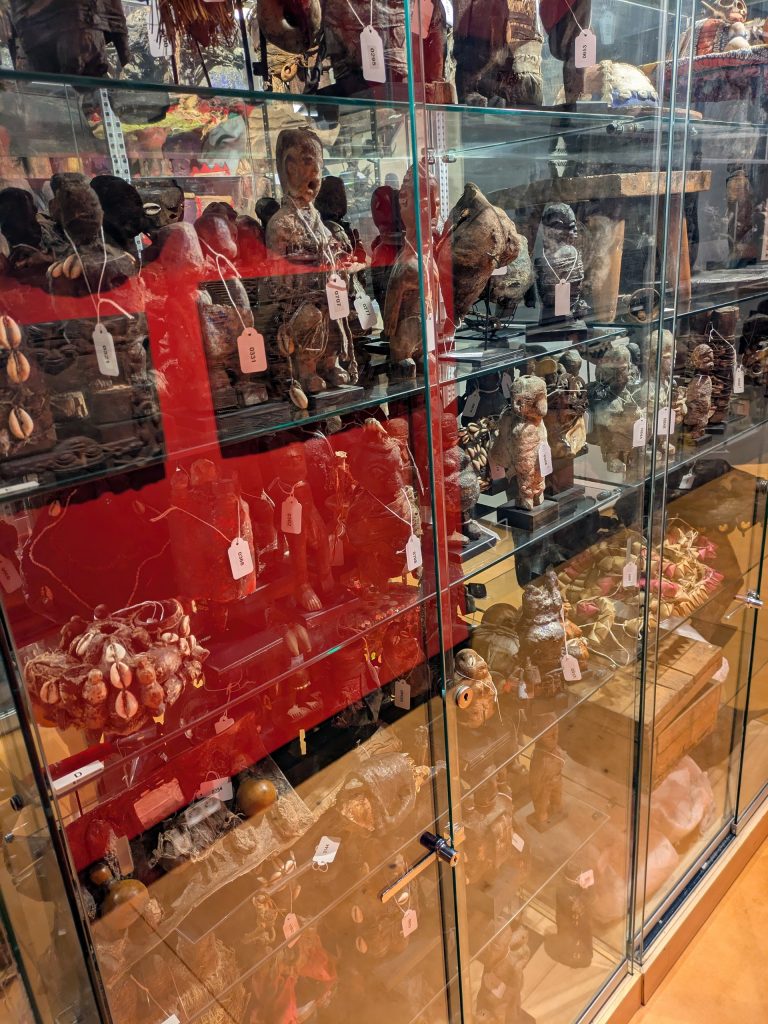
On average, they house more than 801 items from a collection that are deemed «too fragile», «out of scope» or «pending further information».
With this new exhibition, the museum team aims to address the principles of heritage conservation, the technical constraints of storage, the crucial role of inventory, and the ethical issues and controversies that currently run through our practices.
What is the role of a museum? Where does the Vodou museum's collection come from? How can we preserve objects made of organic, sometimes perishable, sometimes sacred materials, and how can we talk about them? What is the invisible part that one carries with them, even in a museum? What can be preserved, and for how long? Can all objects be displayed? And to whom do they truly belong? How can strict museum standards and ecological imperatives be reconciled?
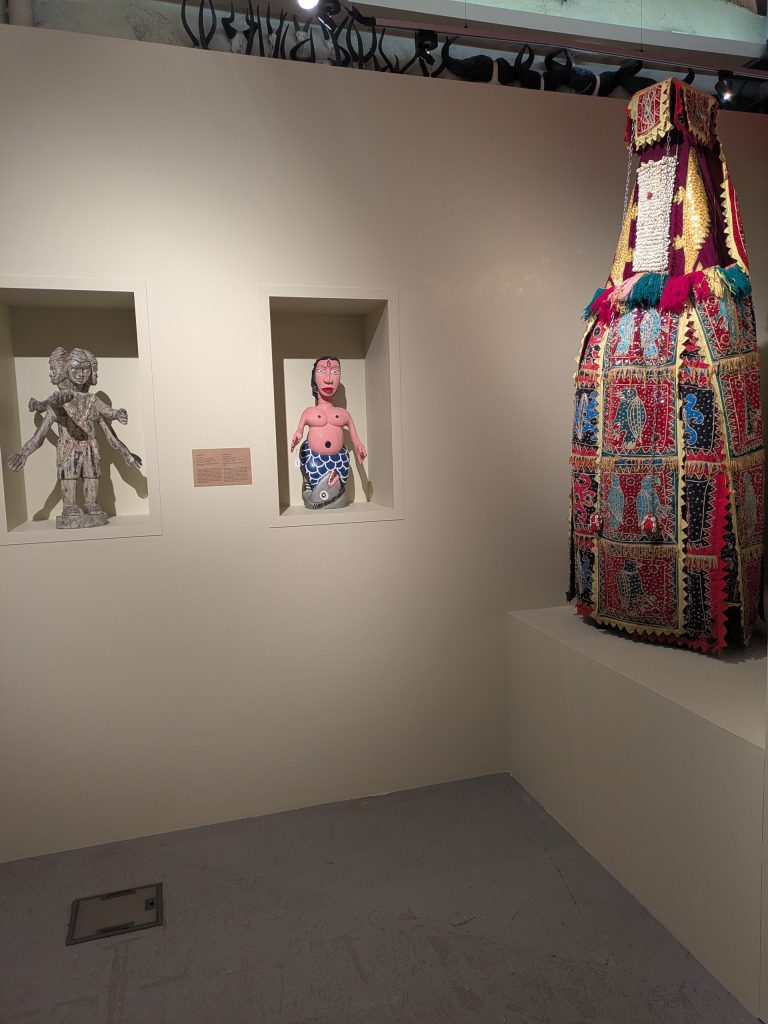
Through the history of the Arbogast collection, we delve back into the geography and history of Vodou. Each object tells a complex story, weaving together living practices, Western and African perspectives, and curatorial choices.
As the visitor progresses through the exhibition, they will be invited to question the very mission of the museum. For protecting, interpreting and exhibiting are not neutral acts. They are a commitment, sometimes a dilemma. As a self-financed, non-profit museum, the Château Vodou embraces its uniqueness: preserving a treasure of collective memory, a fragile heritage, stemming from living cultures, within a listed building, with limited resources.
It tends to lean towards the definition proposed by the International Council of Museums (ICOM): « A museum is a permanent, non-profit, public service institution in the service of society, open to all, which researches, collects, conserves, interprets and exhibits tangible and intangible heritage. It is inclusive, diverse and sustainable. »
« Surfacing the Invisible » is an exhibition, an investigation, and an invitation to collectively reflect on the place we give to cultural heritage – today, and for tomorrow.
A. Beck
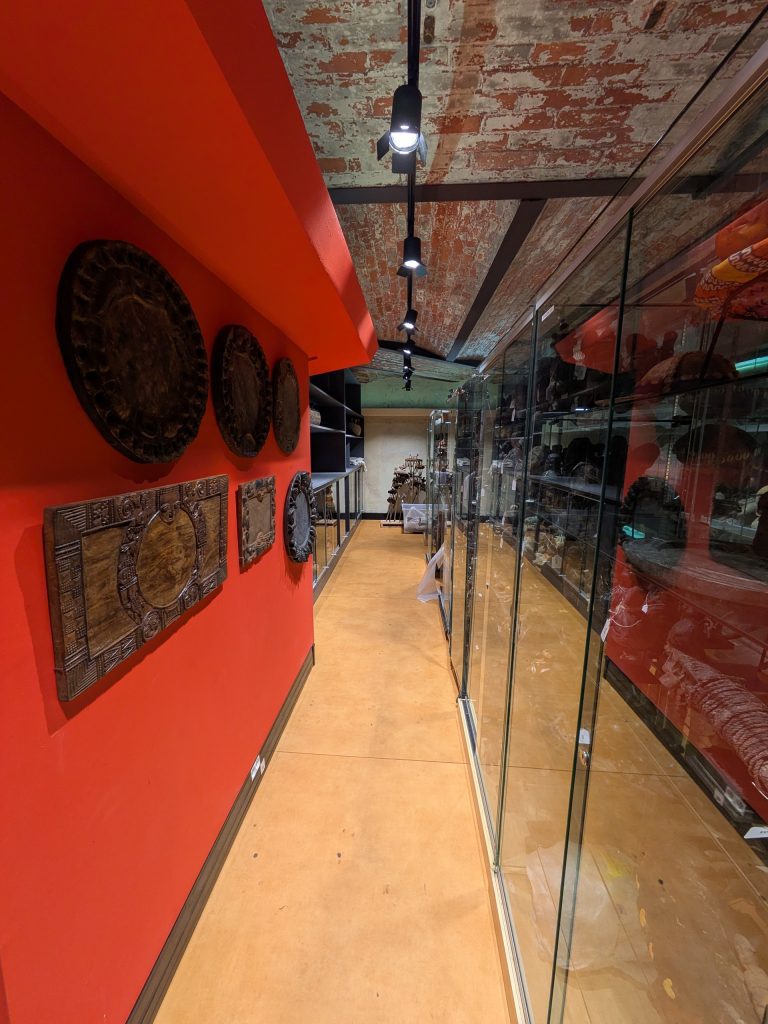
Exceptional access to reserves
(In addition to the temporary exhibition)
Every Wednesday and Saturday, exceptional access to the reserves is offered.
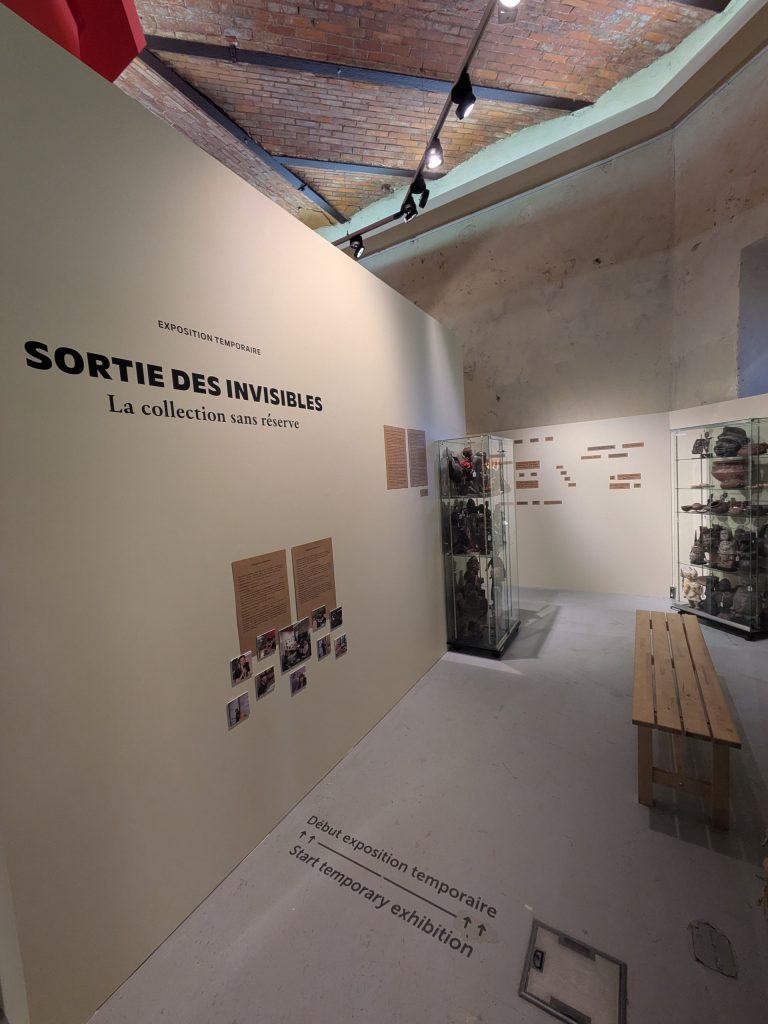
Amble through the eponymous temporary exhibition «The Invisible's Release: The Unreserved Collection» Then take a look behind the scenes: the objects kept in storage, those that have not yet been restored, catalogued or put on display.
This self-guided tour will allow you to discover the usually hidden reserves for yourself.
The possibility of visiting this space will be without bags or phones for the visitor. Furthermore, the museum's teams reserve the right to limit the number of people for better preservation of the collection. Access to this space is included in the entrance fee.
Private Group VIP Tour
For a more in-depth discovery, and as a preview, book your private guided tour including the exhibition and the reserves (for 1 to 12 people), at a time of your choosing, with your friends, colleagues, or family.
A refined moment with a glass of Crémant, a beer, or a baobab juice (from 17th October).
Price: €480 per group.
Reservations: contact@chateau-vodou.com – 03 88 36 15 03
Guided tour of the reserves
On the occasion of the exhibition Release the invisible, The museum is offering a unique visit combining a tour of the temporary exhibition with exceptional access to the storerooms.
Accompanied by a guide, you will explore behind the scenes: the objects kept safe, those not yet restored, catalogued or exhibited. This will be an opportunity to discuss, in a small group, the practical challenges of conservation, the journeys of objects, and the choices inherent in any collection.
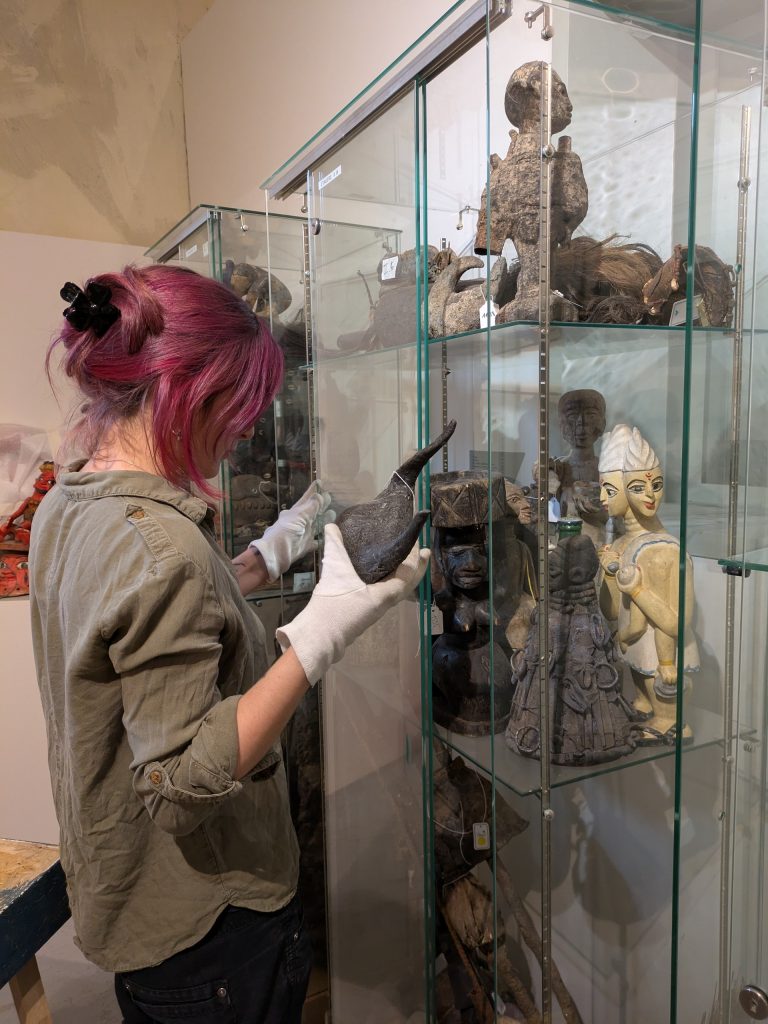
This exhibition was made possible by a renovation of our reserves and an inventory of the collection carried out between June and August 2025. Learn more about this colossal undertaking:
The exhibition in detail...
The exhibition team
Co-written Elise Matt-Gehringer, Catherine Elsensohn, Jean-Yves Anézo, Adeline Beck, Kéfil Houssou, Ana Carolina González Palacios, Alice Niemi, Michaël Mailfert, Maria Hirica.
Collectors and founders Marie-Luce and Marc Arbogast
Commissioner Adeline Beck
Set designer, graphic design, communication Ana Carolina González Palacios
Collection inventory and reserve reallocation Katia-Myriam Borth-Arnold, Catherine Elsensohn, Adeline Beck, Ana Carolina González Palacios, Alice Niemi, Maria Hirica, Pascal Beck, Taner Tasar, Loïc Anézo, Evelyne Beck, Iyad Chambet, Jade Schreckenberg, Natalia Lorena Cocis.
Translations: Anna Sgryska, Elise Matt-Gehringer
Podcast Kawati Studios
Re-reads L. Anézo, R. Goudou, V. Brumm, R. Schaich, G. Dolatabadi, E. Beck, N. Lorena Cocis, N. Meyer
Project supporters: Compagnons du Devoir, Crédit Agricole Heritage Foundation, Crédit Agricole Alsace-Vosges Foundation, Society of Friends of Arts and Museums of Strasbourg, EFH Destination Strasbourg, Crédit Mutuel Saint Jean, Maison Klein, Eurometropolis of Strasbourg J. Gérard, D. Gehringer, F. Undreiner, G. Jean-Charles, S. Freyzs, P. Dufour, Mmes Schwing
Collector's Introduction
I am very pleased with the Château Musée Vodou team's choice, with this exhibition, to clarify the meaning and function of a museum. Its objective is to highlight conservation work by opening, a very rare occurrence, our storage rooms to the public.
For centuries, the collection of cultural objects has served as a bridge between peoples, fostering mutual understanding and intercultural dialogue. However, it is undeniable that certain objects, once intended for veneration or ritual use, have become collector's items, sometimes sources of speculation, with their public access limited or commercialised. This tension raises fundamental questions about the value, repatriation, and preservation of cultural heritage.
Our approach, for Marie-Luce and myself, is part of this reflection. We have assembled a unique collection of Vodou objects, not for profit, but from a sincere desire to understand, to love and to transmit the richness of this culture. These objects, often destined to disappear into oblivion or destruction, have been for us a school of learning, an artistic expression, as well as a vector of social, religious and ecological history.
This collection work was carried out with respect and integrity: each acquisition was voluntary, at the requested price, without coercion or speculation, and none of our pieces have ever been resold. When errors or copies were identified, they were not included in the collection, demonstrating our commitment to preserving authenticity. Our objective has never been profit, but rather educational and respectful of these cultures.
We also wished for this collection to serve as a written record, to thoroughly document the religious, social, and environmental significance of Vodou, thereby contributing to a better understanding of this often misunderstood spirituality. By participating in ceremonies and collaborating with experts and our team, we sought to respect and value this tradition in its complexity. The recent history of this collection, assembled after 1974, falls within the framework of the UNESCO convention, reinforcing our conviction that this undertaking is neither plunder nor subject to restitution, but a contribution to the appreciation of a global heritage. Recognition by the government of Benin, particularly through our collaboration with the future museum in Porto-Novo, attests to the credibility and legitimacy of our commitment.
This exhibition aims to introduce and foster an appreciation for the richness of Vodou, highlighting the importance of this culture in the region's history, social organisation, pharmacopoeia, and ecology. Beyond a simple collection of objects, it conveys a message of openness, respect, and recognition towards a millenary tradition whose impact extends far beyond the borders of West Africa.
Mr Arbogast